Scribbles from Tanzania
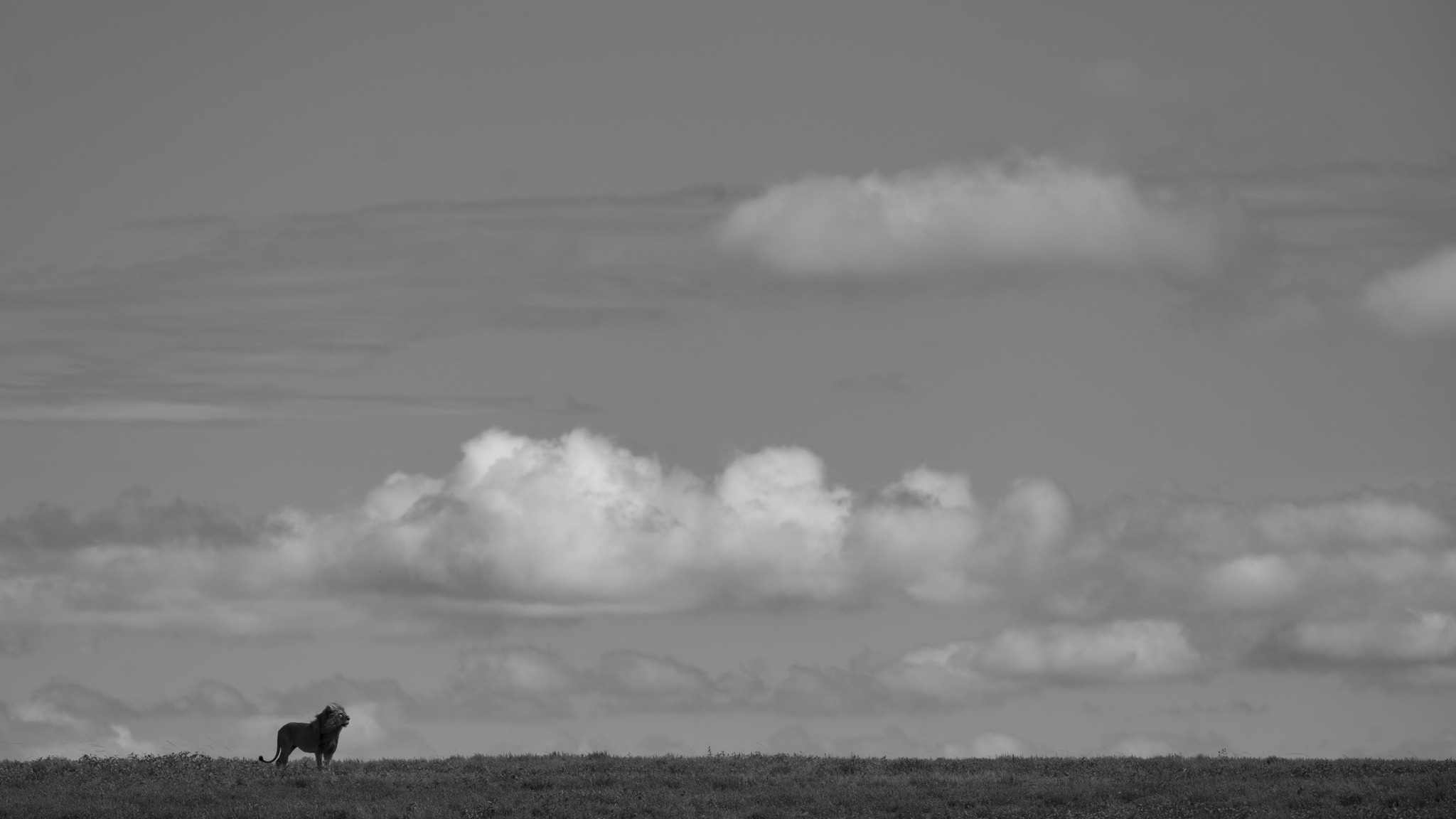
Serengeti.
Say the word, loudly.
Doesn’t it roll off the tongue in a manner that conjures up images of something mystical and wondrous?
Finally, after years of talking about it, I am on my way.
As our little plane takes off from Arusha, I look out of the window at the land below.
Last week’s rains had left their mark. A rich uninterrupted ocean of green lay below me. The land undulated sensuously to form hills and mountains, often looking like the folds of a vast green blanket left carelessly on the bed.
As we approach our destination, it spread out more comfortably and I could see the familiar shape of the acacia trees. From the plane, the acacia trees were throwing shadows that make them look like odd shaped spindles.
And the clouds!
Small and roly-poly clouds roam carefree and just as we start our descent, thick, bulbous clouds, pregnant with the possibility of rain embrace us.

The clouds…sigh…Africa does have the most devastatingly beautiful clouds !
*****
There isn’t anything happening.
It’s cold. It’s dark. It’s quiet. It’s full of promise.
I wrap the shuka around me a little tighter and extend a protective hand over my cameras next to me as our vehicle hits a particularly nasty bump on the track.
There is a pride of lions pretty near the camp. They had a kill the other day, but this morning the rich smell of a decaying carcass isn’t wafting our way.
The smell of dung gently passes over us. Elephant dung!
I look into the misty darkness to see if I can spot the familiar arched back.
If I pay attention there is a dizzying range of smells around me. The rain of last week. The mud. The puddles. Of unseen wild creatures.
However it is the sky that demands my attention.
Up ahead, slightly to our left, there is a hint of an orange peeping above the horizon. In a matter of minutes, the mellow glow starts spreading and changing in its tone and nature. The core retains a deeper orange, with a hint of the fiery and a richer, yet gentler yellow growing across the skies. The clouds nearby, seem trapped in its golden light, their boundaries marked in bright golden ink, the darker clouds further away, looking less ominous.
A new day begins.
Wonder what today is going to bring.
*****
The Maasai called it Siringet – the place where land moves on forever.
I look around me as I sip on my black coffee and understood why.
The land lies as one vast, uninterrupted expanse with just a very occasional tree marring the flatness of the terrain. It stretched and stretched . And we have been seeing nothing but this emptiness the whole morning.
The landscape is dotted with gazelles intently grazing though earlier we passed through long periods when neither prey nor predator was visible.
It’s easy to think of this place as being untouched by time and man. I wonder if this exactly how the scene would have looked for a Maasai warrior a century ago. And maybe, this is how the scene would look a century down the line.
Eternal.
Our vehicles roar to life.
Breakfast wasn’t the only thing that ended.
*****
It was in 2018 that I first came to Africa. I was in Kenya with my family, armed with a rudimentary camera and a single lens.
I was a novice with the camera then.
I had arrived smack in the middle of the migration, just as the masses of wildebeest and zebras had crossed the rivers in Mara. I remember the nervous grunts as the anxious animals milled around a river, summoning up blind courage to leap into the waters. You could feel their nervousness, their deep anxiety about taking a decision about diving into the flowing waters where no one knew how many crocodiles lurked.
Then there was that hot and dusty afternoon when hundreds and hundreds of wildebeest came charging in from the horizon, in a frenzied run, raising a cloud of dust that hid how long the line was.
Knowing that I didn’t have the skills to capture the moment, I had kept my camera down and simply observed, mesmerized.
And, here I am, early on the second morning at Serengeti, watching the horizon with a mixture of disbelief and delight.
A long line of wildebeest was walking in.
The unceasing Great Migration had arrived in Serengeti.

There were hundreds…hundreds of wildebeest that had arrived. And this was just a fraction of the total number that will make this journey over this land

The mad run of the wildebeest…why does it start, why it continues,
why do they stop when they do ?
*****
The migration also means plenty of food. For everyone.
The tall grass gets mowed down in a matter of days. And, there is a problem of plenty for the predators. Yesterday morning we saw a pair of lions sleep utterly uninterested in the unending line of wildebeest as they trooped past. Some of the wildebeest were curious enough to approach the lions as if to check if all was well with them.

Heh heh…the wildebeest are perplexed. The apex predator just ain’t interested in them
Occasionally, you watch a story right in front of you that tugs at your heart a little.
The young wildebeest who still need to be guided by their mothers sometimes get lost and separated from their herds. Maybe the mother got killed or maybe they simply lost each other in this vast landscape and the little thing, got even further separated as it ran around panic-stricken searching desperately for the mother.
I had listened to stories of how the young wildebeest often appear to mistake vehicles as friendly entities. Rahul had told us how they had often encountered heartbreaking incidents of the young ones, in mindless desperation, running behind the vehicles, which obviously only results in them being further away from the natural protection that herds could provide.
We were watching a pair of male cheetahs lounge insouciantly under an acacia tree when we noticed a lost young wildebeest walking almost straight towards them.
Fortuitously for the young one, it veered slightly which took it past the unknowing cheetahs. The two of them saw the wildebeest only when it once again took a turn passing in front of the two cheetahs.
Again, fortunately for the wildebeest, it came towards our jeeps and went behind us and the cheetahs lost sight of it.
An hour later, one of notice that the same calf was returning. It had clearly managed to survive for an hour but now it’s heading straight to the cheetahs. This time the cheetahs see it and are immediately ready.
The end was mercifully swift.

Two adult cheetahs. One wildebeest calf. No contest.
*****
It’s been a long time since I have seen so many vultures.
And, seeing so many is a good thing.
The world tends to look at vultures negatively. Maybe it’s their role as scavengers. Maybe it’s their appearance, hunched, perpetually crouching in a world where a straight spine is seen as a mark of uprightness. Perhaps all of it together. But, yes, vultures are not looked at fondly.
But they play a critical role in the environment.
Carcasses often are infected with lethal bacteria. Vultures are scavengers and possess a digestive system that can handle these bacteria without harming themselves. With a decline in their population, these carcasses become food for feral dogs, foxes, jackals or rats. These mammals, however, don’t destroy these bacteria, but instead carry them and further spread these diseases.
Right now, in front of me, there is a carcass of a zebra.
No predator can be seen nearby and a flock of vultures and the odd Marabou stork are feasting on it. We park our vehicles nearby and observe the vultures, squawking, arguing and fighting with each other over who should get a prime spot at the table. The Marabou storks act as if they are above such petty fights. They observe sagely before calmly stepping forward for a few pecks and then step away.
I idly wonder about the predator who had not bothered to eat more of the kill. Why did it not finish the meal ? Was it not hungry enough ? Was it chased away ? What then happened to the larger predator?
More questions to add to the list that I will never get answers for.
I focused on what was in front of me.
I want to capture the intensity of the feast. I try to zoom in tight, I try to go for a slow shutter…something that helps convey the rawness of the moment, the desperate hurry to eat, the unwillingness to share, the fury at losing one’s place.
I fail.
And, such small, often unremarkable moments form a day in the wild.

Survival is at stake…these fights can be vicious
Do let me know how you enjoyed this…watch out for more stories and images from the Serengeti.
Cheers,
Ashok
Subscribe
Love wildlife photography?
Get my latest photos | blogs | tutorials | giveaways before anyone else!
Categories
Most Popular


7 years ago
Tales from the Mara III – The fascination of a hunt
She crouched. Low. Body tense. Poised for...

As always, I enjoy reading your article and the images. The Calving season in Ndutu is magical.
That’s so nice of you to say that, KDS…yes, some day shall go for the calving season too 🙂