Have you heard a wolf howl?
The lone wolf does not howl for company,
but to remind the moon that he is
still standing,
still wild,
and
still free.
– Unknown
I looked around me in dismay.
The land spread around me, an open, undulating landscape, mostly populated by unappealing shrubs, scattered short trees and desultory rocks.
My guide had just informed me that they believed there were three wolves in the area.
Three!!!???
How on earth am I going to find three wolves in this vast spread?
Usually, one goes about trying to find one’s subject based on some knowledge about their habits, the places they frequent, what they avoid. It was then that I realized that I really didn’t know much about the Indian wolf. Heck, I didn’t know that India still had wolves till a few years back!
I wasn’t aware of their numbers, their spread, the locations they are found in, the threats they face, their habits…nothing.
These questions stayed with me and I looked around for answers when I returned. What I found was sobering.
Many conservationists bemoaned the same point – the lack of knowledge, the lack of information that we have about the Indian wolf.
They talked about a fundamental flaw in the approach of the authorities where the focus on wildlife is restricted to the areas with forest cover, whereas there is a thriving wildlife that exists in places called as the Open Natural Ecosystems ( ONEs), landscapes that are dry, has sparse tree cover and unfortunately tends to be dismissed as ‘wastelands’.
This landscape is also under threat and is diminishing but unfortunately doesn’t attract as much attention as does the diminishing forest cover. (Some might cynically point out that even all the attention on the diminishing forest cover has had no impact on the decisions to pursue ‘development’)
An IUCN Red List assessment indicated that the wolf population might be around 3000. That’s quite a sobering number. It’s lower than the tiger count. (Just to put a perspective to that number, I read that between 1875 and 1925, 200,000 wolves were killed)
Of course, these are estimates derived through models and not by actual count, so actual numbers might vary….it could be even lower!
Worse, I read, is the fact that we really don’t know the trend of their population. Is it growing? Is it flat? Is it reducing? What are the % figures?
Their biggest threat comes, expectedly, from a diminishing habitat. As highways, factories etc get built without adequate assessment of the impact (wastelands, remember?), their denning sites get disturbed, their prey availability gets impacted.
I wasn’t aware of all this as I stood next to the jeep looking around. The skies were darkening with monsoon clouds contrasting the dull brown landscape, interspersed with pockets of green grass, that stretched all around me. Three wolves. Somewhere in this.
I calibrated my hopes of a sighting and the lower expectations helped take the pressure off. I enjoyed the weather, the variety of birds that flitted around. Pipits, quails, and many others that I normally would have ignored, got a little more attention from me.
Later, on the first evening as the day was ending and we were mentally already heading back, we drove up a slight incline and my driver whispered the magical word –
Wolf!!!!
And there she was. Lying on the ground, in a small depression. Face between its forelegs. Looking at us with no evident sense of concern. That lack of stress helped us comfortably move around at a good distance, checking out the right background for a good profile shot. Occasionally, she (the guide informed me that she was the matriarch) turned to look at us but mostly we were totally ignored.
After a few shots, I kept my camera aside and waited for her to get up and walk.
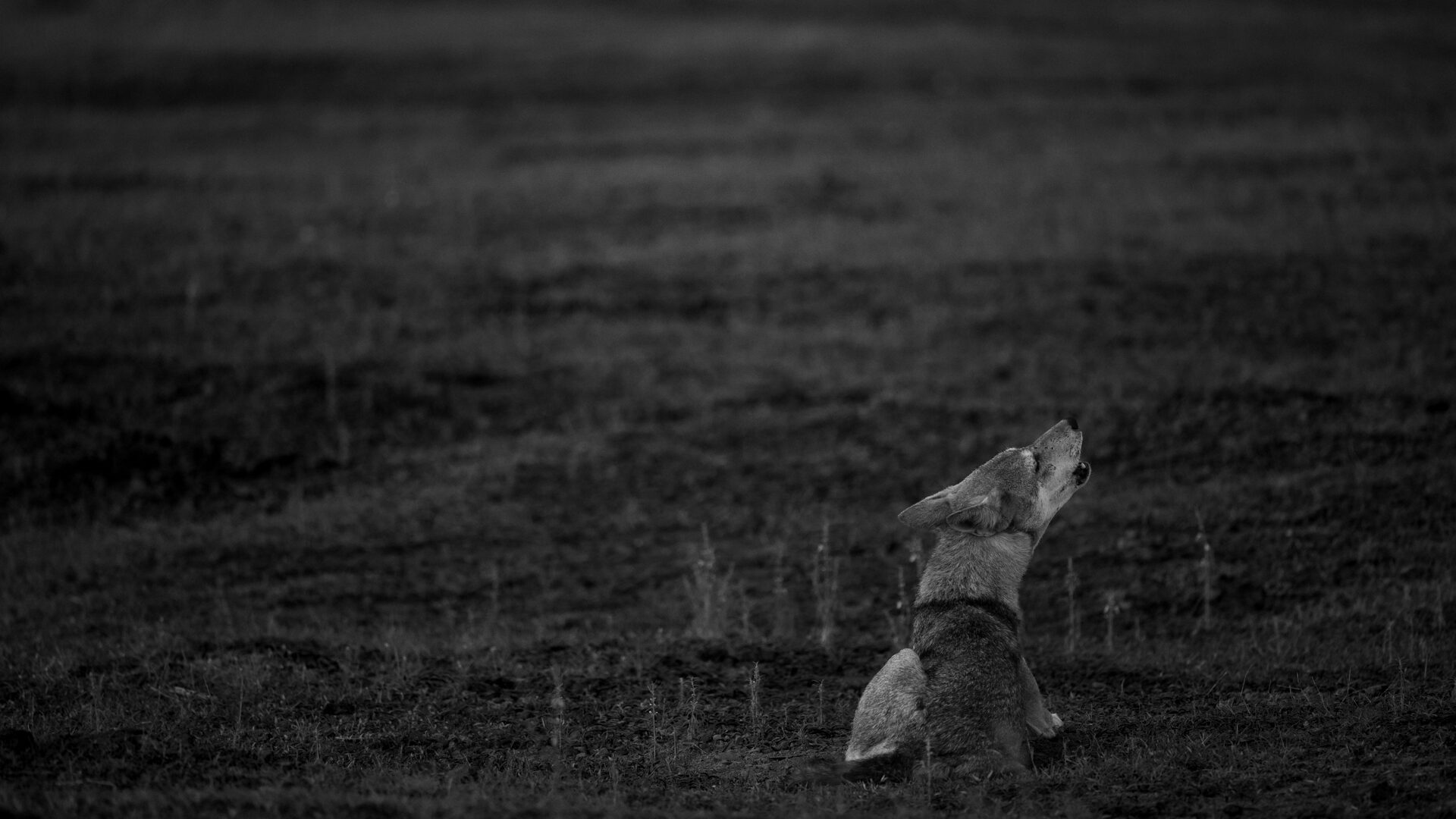
Without warning she raised her head and howled.
It was a long and mournful call. The sort of call that one expects will penetrate the deepening gloom of the evening, travel across the rolling landscapes, look under the rocks, shake the short trees, rustle the shrubs searching for an answer.
The howl was long, long enough for me to wonder about the lung capacity of this slender animal. Again and again she raised her head and gave out the same haunting call, a call that seemed to maintain the same pitch from the start before trailing off, lost in the hills.
That evening she didn’t get an answer.
Soon, driven, I guess, by the lack of response, she got up and started walking. We trailed her initially, occasionally driving ahead anticipating her path. We stayed with her for the better part of the next 30-45 minutes till such time that the darkening surroundings forced us to leave for our camp.
As we left, my driver commented, his voice muted in wonder of what he had experienced, “I have had more than 300 wolf sightings but till today I had never witnessed a wolf howl”.
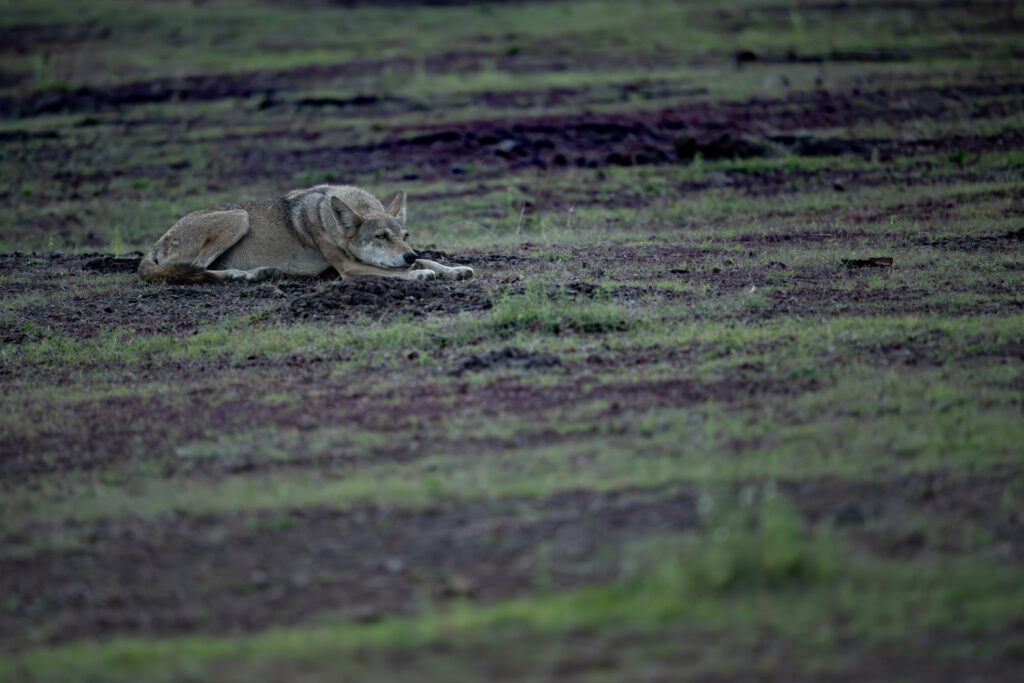
Imagine coming up a small incline to this sight
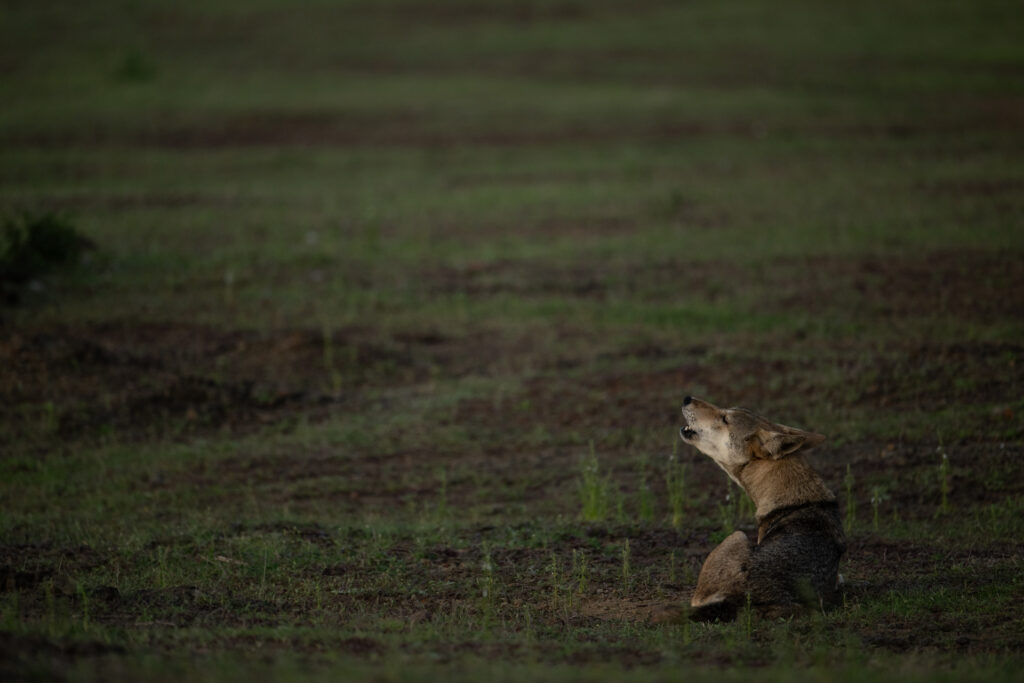
I still remember the goosebumps!
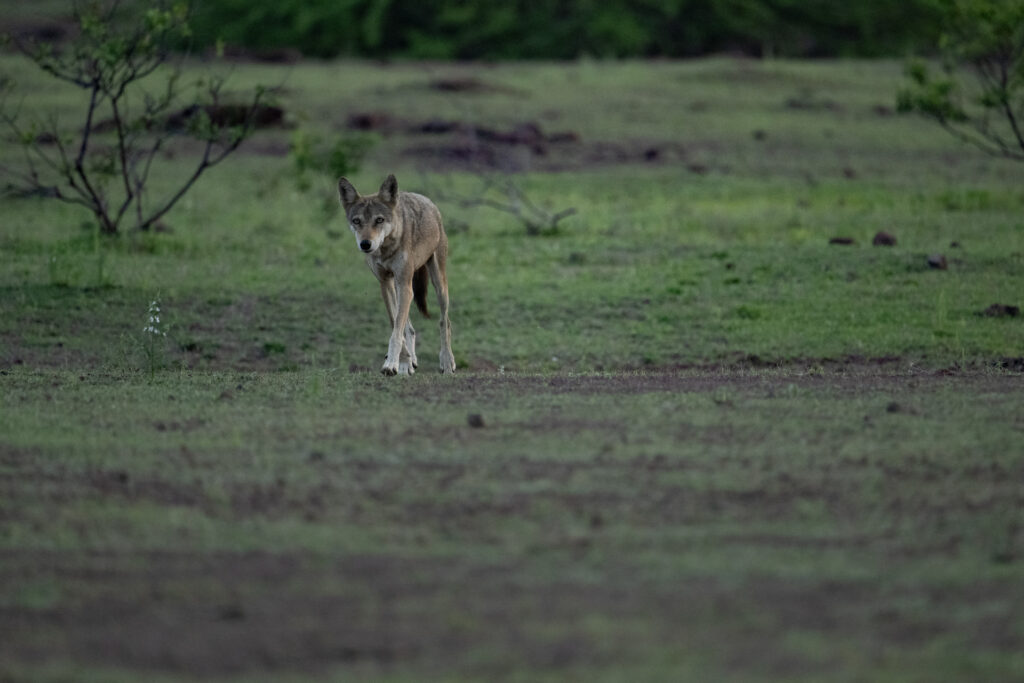
They walk so lightly, barely kissing the ground as they move swiftly and smoothly
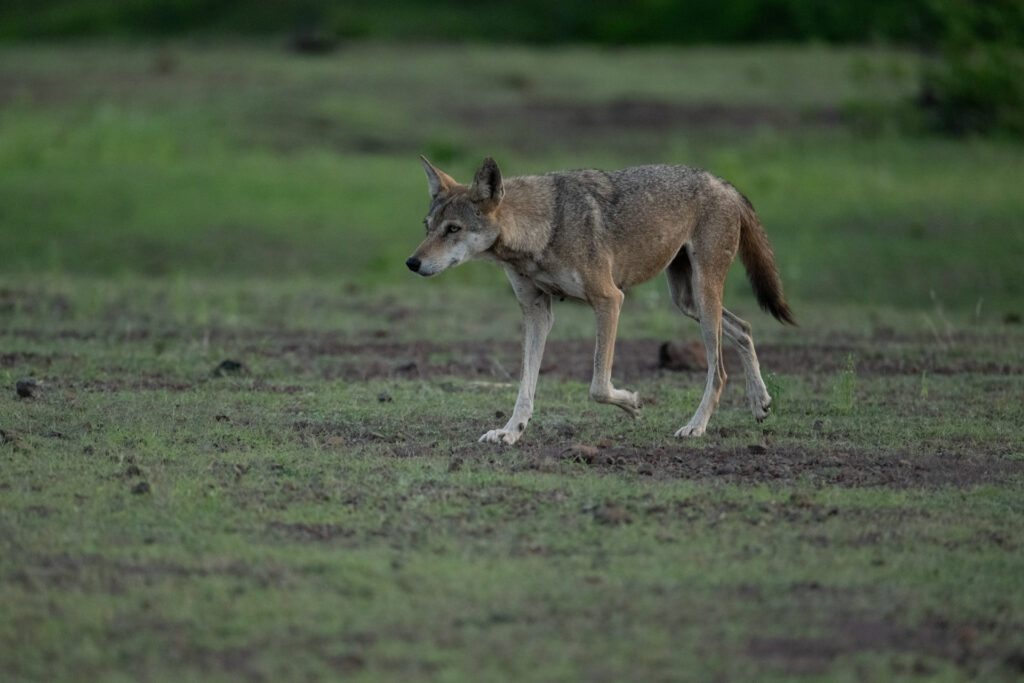
Having seen more wolf documentaries from America and Canada, I was struck by how slender the Indian wolf is…even if the reasons are obvious when you think of it
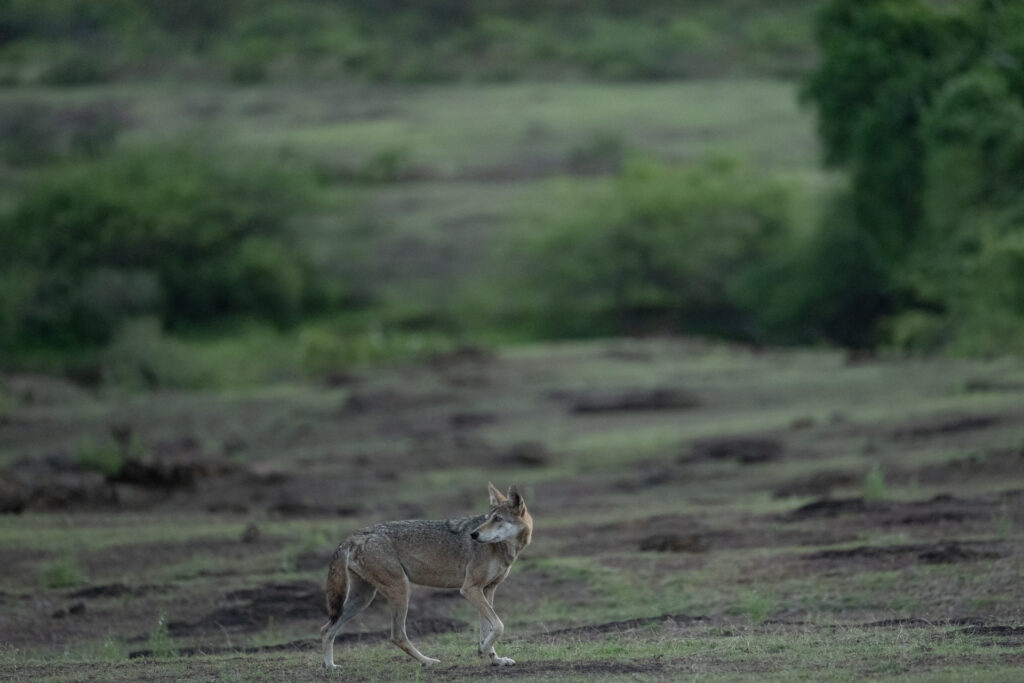
The D word is catching up on their habitat
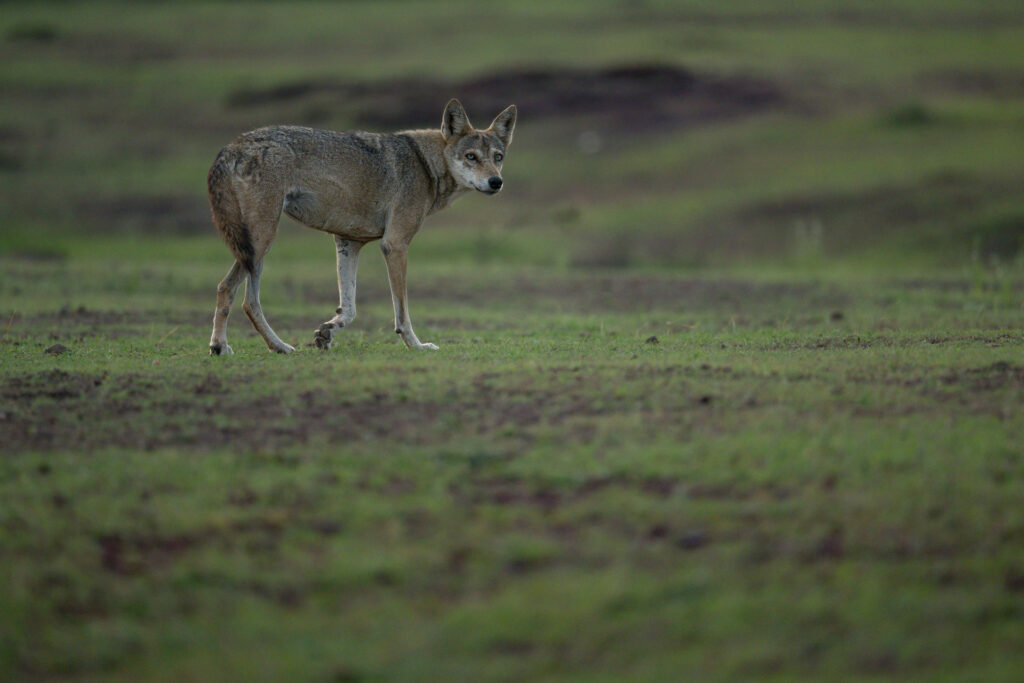
S’long….till we meet again!
I should keep better track of all the sources I read from, here are the links to some of the more referred to articles :
https://sanctuarynaturefoundation.org/article/the-indian-wolf—a-vanishing-heritage
https://frontline.thehindu.com/photo-essay/indian-gray-wolves-face-extinction-in-threatened-grassland-habitats/article68520005.ece
Cheers!
Ashok
Subscribe
Love wildlife photography?
Get my latest photos | blogs | tutorials | giveaways before anyone else!


I hope they able to hang on.
I swear…they have been accorded the highest level but….
the Indian wolf is much slender than what I expected…
Hope their habitats are preserved…and the multiple voices are heard by the authorities..
Yes…their slender frame was the first thing that struck me…it’s a constant fight. Right now, clearly forested areas are under threat (Andamans is the example of the worst case) and the wolf’s habitat is often wrongly described as ‘wasteland’ so…but one hopes.