My favorite books on photography – Part I

“So many books,
So little time”
— Frank Zappa
As I looked at my collection of books and started to do a shortlist, I realized that many of the books that will get into this list are not by wildlife photographers. On the contrary, its books by landscape and street photographers along with a choreographer that made an early but significant impression on me as I started on my photographic journey.
The list is not in order of preference but as I put down the names, a subconscious sequence revealed itself – the initial books talked about the thinking that should precede clicking the shutter, then the list moved to the ‘what to’ and the ‘how-to’ followed by the result of the click.
The list has ten books and that made me split this into two posts.
Here you go…the first part of the list.
- The Creative Habit – Twyla Tharp
A book by a choreographer published more than two decades back might be a strange choice in a list of books on photography, but this book did so much for me. I have referred to a quote from this book often in my posts – What is your focal length? – but even before that, there was another quote that had an impact earlier – Creativity is a skill.
The book is a handy tool to build your creative skills as Twyla Tharp narrates a compelling story drawing upon examples from all sorts of art – from dance to music, from theatre to movies, punctuated with exercises for the reader to both become self aware and to practice.
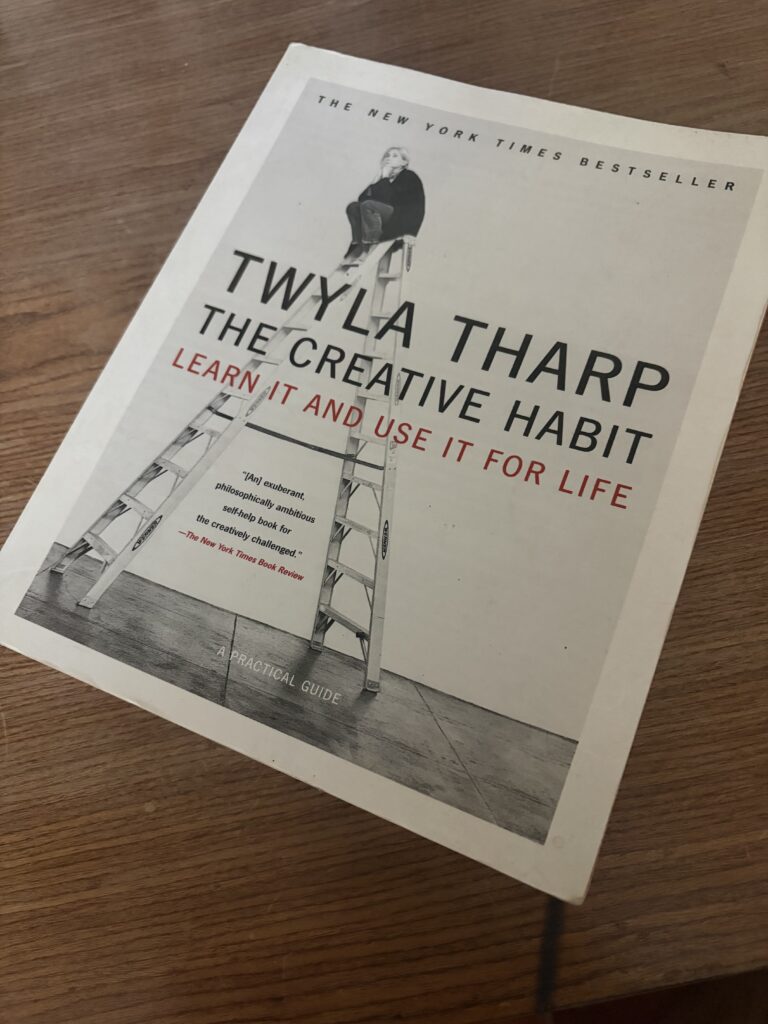
She says in her opening chapter – I can’t guarantee that everything you will create will be wonderful….but you will never be afraid of a blank page or an empty canvas or a white room again. Creativity will become your habit.
I don’t know if creativity has become a habit for me, but as someone who has never been accused of displaying an ounce of creativity, the book both gave me a belief that I could be creative and at the same time, showed me a path I could explore.
- Steal like an Artist – Austin Kleon
The first quote in the book is by Picasso – Art is Theft.
The key point of the book (if you have not figured it out from the title) is that all creative work is built on what came before and that nothing is completely original.
The book has a deliciously informal style, peppered with quotes, engaging anecdotes and quirky graphs and sketches. Austin Kleon’s point is that no one is born with a style and says you need to build it. And, you can’t search for your style, it is built through copying. He writes about how one can work on it, what one could do to be more receptive to ideas, to be attentive and, who knows, finally…find your voice. I am not sure if I have found my voice but this book has certainly shown me ways to proceed on that journey.
It’s not your usual serious book, but within an easy read lies useful nuggets of wisdom.
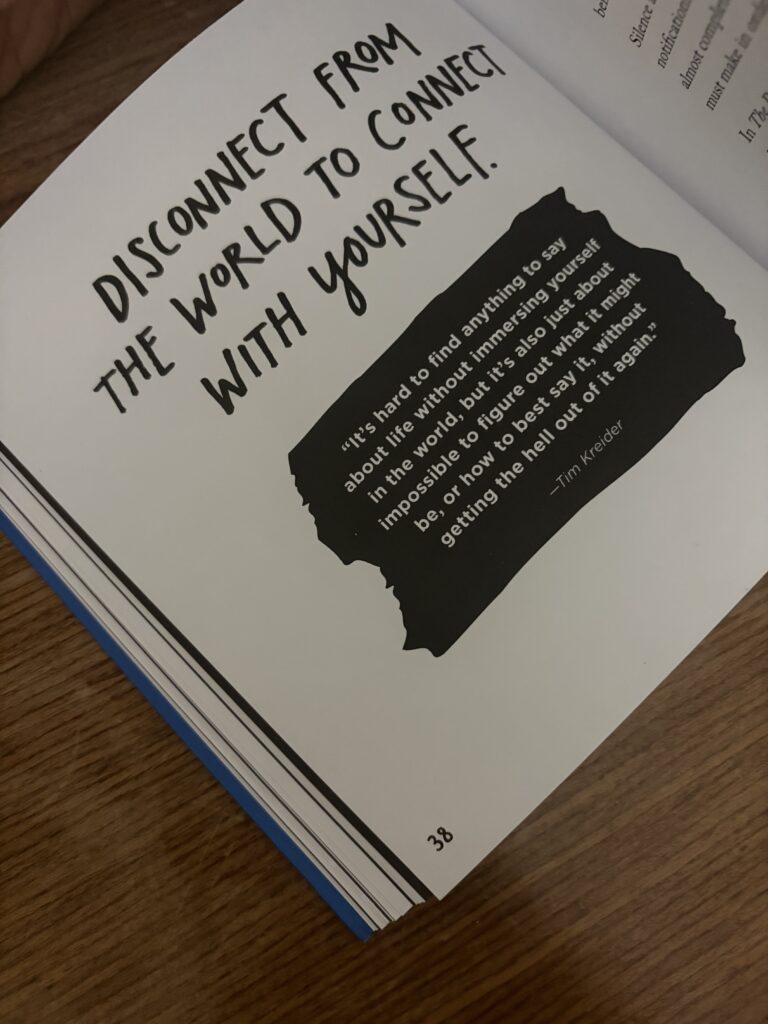
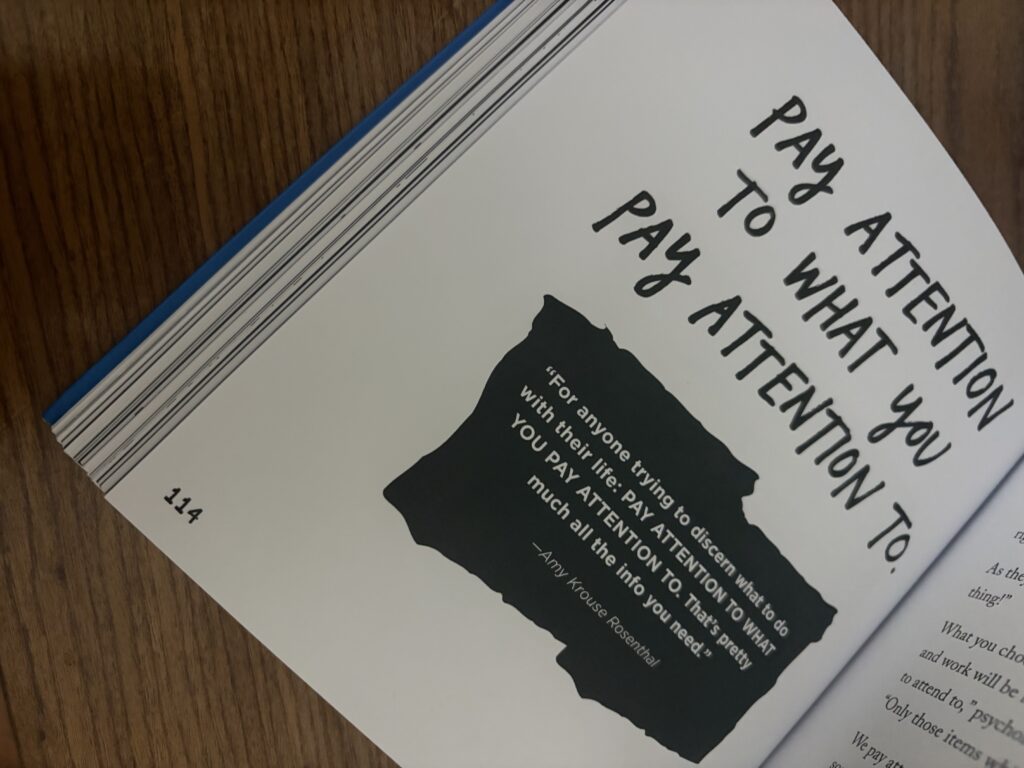
Here’s another quote from the book : What is originality? Undetected plagiarism – William Ralph Inge.
- Light, Space and Time – David DuChemin
I don’t recall how and when I stumbled upon David DuChemin’s website but I have definitely spent hours going through the incredible number of articles that he has written. It was in one of his articles that I first read that creativity can be built – the provocative question he asked, if I remember right is – how much time are you willing to put on your calendar for becoming creative? I had bought Twyla Tharp’s book after reading him recommend it on one of his posts. In other words, David DuChemin started influencing me much before I read this book.
After having read most of his blog posts and quite a few of his books, when I read the announcement of his new book, I did wonder if there would be anything new in his book. Thankfully, a relative who was well aware of my fandom, gifted me Light Space and Time and as I read the book I realized how wrong I was.
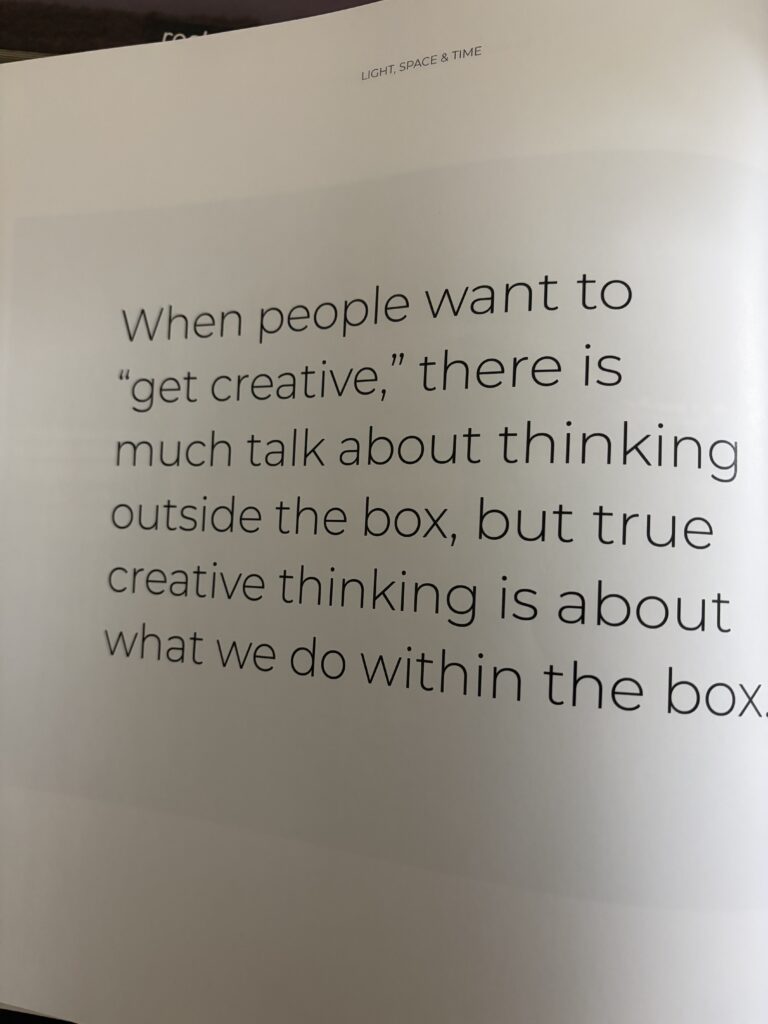
The thrust of his message is to encourage you to explore your relation with what you would like to create and try to figure out possibilities. He urges you to get over the obsession with gear and instead asks if you have clarity on what you intend to create with the gear you have? He poses intriguing questions, suggests answers that make you think and his passionate voice inspires you to look deeper and explore further.
As an example, he asks this question – What do you want your photograph to feel like?
That made me pause and rethink about my approach to photography.
- The Meaning in the Making – Sean Tucker
This is a deeply contemplative book with thought provoking philosophical asides. After all it is written by a guy who was a priest before leaving the church and becoming a street photographer. Maybe it is this background that lends such depth to his writing that you often keep it aside while reading to ponder over you just read.
Take this line, for example – embrace your shadows and protect your highlights. That’s, of course, sound advice when it comes to photography, but Sean Tucker takes it forward and links it to life. That in life too, it is important to guard your high points, what lights you up and at the same time accept your flaws, your dark self, instead of hiding from them.
It is in this manner that he takes photography (or art) from being just a hobby or a passion to something that is intrinsic to you.
And, being intrinsic to you would also mean that there are other emotions that are bound to come up in this journey – envy; reaction to criticism; the flush of success. The book talks about all that too. Essentially, he talks about how we should try to be authentic and embrace our wholeness while creating.
So.
These were the books that helped me recognize the importance of the mental approach to photography, that a phototrip isn’t one where I can just go and simply pick up my camera and start clicking. These books have helped me take my first serious steps, to evolve as I tried to find my own clarity.
Have you read any of these books? Did you enjoy them? Do you have any recommendations that I could explore?
The next part of the list is about messages that you decipher from photographs as a viewer, stories that you can create as a photographer and the role that marbles played in giving me more clarity about the work photographs can do.
Stay tuned.
Cheers!
Ashok
Subscribe
Love wildlife photography?
Get my latest photos | blogs | tutorials | giveaways before anyone else!
Categories
Most Popular


3 years ago
Pushkar…camels, companions, conversations and… a camera
Pushkar. I can’t remember exactly how Pushkar...

8 years ago
Tales from Kenya III : The thrill of a river crossing
I stretched myself, rolled my shoulders, and...